Thursday, October 14, 2010

Foraging

chanterelles and chestnuts

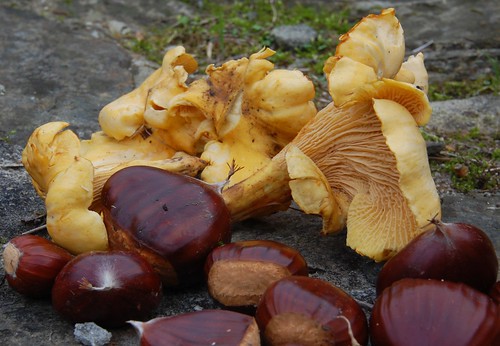
One of the best things about living on the edge of a forest with your own land is that wild food collection is as easy as stepping out to the vegetable patch. Today I went out for the first of the sweet chestnuts and scored some lovely wild mushrooms too.

Even so I was about to consign them to the fridge and have a slice of bread for supper when the phone rang and Mr. Stripey told me not to be so silly. So I made the fancy dinner I'd planned whilst walking around the fields.
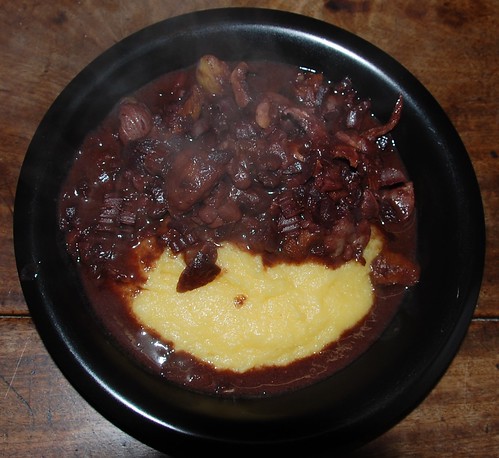
chestnuts and polenta

It's nothing more complicated than a sweet chestnut and chanterelle stew served with a big dollop of comforting polenta to soak up the red wine sauce.

Sweet chestnuts look a little like horse chestnuts but the green cases are much much spikier. Wear gloves to collect them and pick them over carefully. Any that are not plump within their chestnut skins aren't worth having and any with tiny holes will have a worm living inside, so best discarded.

Chanterelles are some of the easiest wild fungi to identify but it's still worth doing your homework before heading out to the woods. You can substitute any sort of edible mushroom if you can't find any.

To serve four, although perhaps not with quite such large portions as the one I gave myself you will need:

300g fresh sweet chestnuts.
100g fresh wild fungi (or use oyster mushrooms from the supermarket)
Olive oil
1 medium onion
2 stalks of celery
2 cloves of garlic
300ml red wine (I used a supermarket brand Merlot)
20g dark miso
15g ready made Dijon mustard
Black pepper and salt.

Peel the chestnuts by slitting the hard brown skin and pulling it away. It should separate easily leaving a thinner pinkish skin over the nut. Bring a pan of water to the boil and drop the chestnuts in to simmer for about 10 to 15 minutes. Refresh in cold water and peel off the thin underskin. This isn't particularly easy and if you've left them to simmer for too long the nuts will crumble. Just do your best.

Clean and slice your mushrooms. Heat a clean pan and add a big slug of olive oil to it. Quickly fry the mushrooms until they have lost moisture then, retaining as much oil as possible in the pan, remove them to a warm dish to rest until needed.

In the same pan and oil as you cooked the mushrooms, cook the finely chopped onion and celery until they start to brown. Season with plenty of ground black pepper and add the crushed cloves of garlic. Stir everything around then add 300 ml of wine. Bring to a simmer and allow to reduce for five minutes. The liquid should reduce to about half its original volume.

Mix the miso and mustard with 200ml of cold water and add it to the pan stirring well to combine. Add the peeled chestnuts and stir, then cover and keep over a low heat while you make the polenta.

I used five minute polenta made according to the packet. At the end of cooking add a good measure of a well flavoured olive oil or some of your favourite vegan margarine and keep warm.

Add the mushrooms to the pan of simmering chestnuts and mix well together.

Serve a dollop of polenta for each diner topped with chestnut and chanterelle stew. Make sure everyone gets their fair share of the gravy. Decorate with finely chopped parsley or chervil if liked.

Eat immediately with a glass of good red wine.

Saturday, October 09, 2010

Indian Summer

I was born in an indian summer. My mother tells me she sat in the hospital gardens with me, mothers in those days spent 10 full days in hospital, and we soaked up the unseasonal sun together.

This year, my birthday was grey, wet and cold but after a week when I was sure that autumn had set in properly the skies cleared and the temperature rose. The perfect moment for a celebration drink I've been meaning to share all summer.

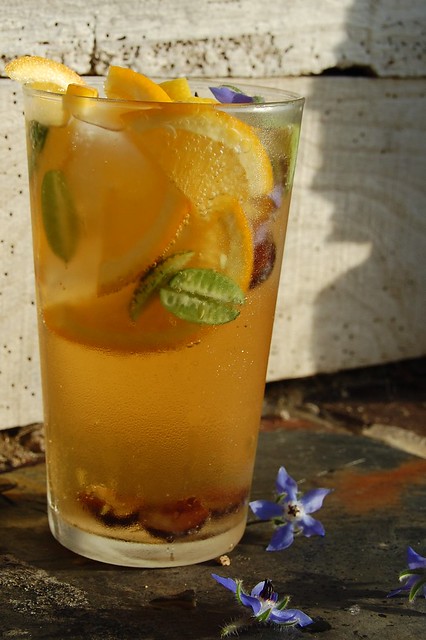
pimms

The fruit punch bases known as Pimms are very traditional English drinks and the most well known version is based on gin, the quintessential English spirit. It's almost impossible to buy the branded version in France, a secret recipe which has been guarded since 1823.

However, it is possible to create a home grown equivalent which is almost as good. Serve it with plenty of ice, slices of orange, lemon and cucumber, add small pieces of aromatic soft fruit like peaches or melon, a sprig of mint (not in picture!) and decorate with borage flowers. You can make it in a jug or the glass but it's a long drink. Serve it in an old fashioned half pint dimple mug or use a straight pint glass as I did.

To make a full 750ml of Pimms No1 style basic alcohol fruit cup mixture which will allow you to make over 3.5 litres of drink you will need:

300ml Dry Gin (no need to use a Bombay Sapphire or other expensive brand)
300ml Italian Red Vermouth (again, pick one you like but it doesn't need to be expensive)
150ml Orange Curaçao (Cointreau works)

If you mix these in a 750ml screw top bottle you can keep it in the fridge and serve yourself delicious drinks on any sunny day that calls for it.

To serve, take your glass and half fill it with ice. Add a measure of Fruit Cup mix and fill the glass with fruit and flowers. Top up with 3-4 measures of lemonade, soda water, tonic water or a mixture to taste. The final alcohol content will be about 6%, equivalent to a strong beer or half the strength of wine so take care and drink responsibly.

Saturday, September 25, 2010

Saturday Breakfast

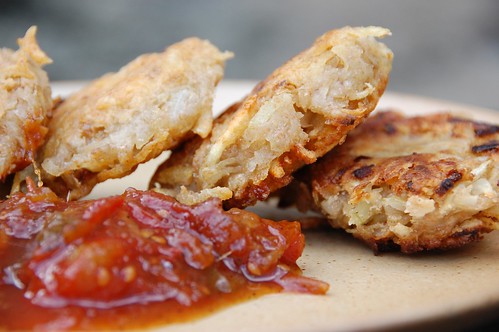
latkes tomato jam breakfast

Latkes with Tomato Jam, served with a big mug of coffee.

Back soon.

Saturday, September 11, 2010

Beetloaf

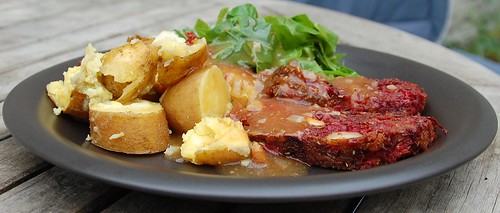
beet loaf

This is a favourite recipe I don't make often because I'm too lazy to do the grating required but it's filling, tasty, economical and, dare I say it, good for you. It's also just the sort of no-nonsense old fashioned vegetarian home cooking I crave from time to time.

The recipe makes a large loaf tin roast which can be served straight from the oven, eaten cold with bread or crackers or reheated in a sauce so despite making six good servings it's ideal for the single diner. I've never tried freezing it but I'm sure it would.

You will need:

250g grated potato (about one large, well scrubbed so no need to peel)
250g grated beetroot (about 2 medium. Scrub them well, no need to peel, trim the root end and use the leaf stem stubs to hold the root while you grate it)
150g finely chopped onion
100g fine breadcrumbs, wholemeal is best.(I used my coffee grinder to make mine!)
100g coarsely ground nuts - almonds, walnuts, cashews, whatever. (the grinder struggled here, and few nuts were left whole which was rather nice)
75g tahini (or peanut butter or if all else fails a tablespoon of oil)
2 tablespoons soy sauce
black pepper
2 tsps dried herbs (thyme, sage, mixed, de Provence) or the equivalent in fresh

Mix the vegetables, crumbs and nuts together. Dilute the tahini with the soy sauce and mix everything together with the pepper and herbs.

Bake in a well oiled loaf tin for about an hour at 180C. Line the bottom of the tin with a strip of oiled baking parchment if the turning out whole is important but usually you'll get away with it anyway. Allow to cool in the tin for 10 minutes and then turn out to decorate in whatever retro fashion floats your boat. I've seen meatloaf recipes suggest masking in tomato sauce or ketchup even. Interesting.

I served mine with dutch oven steamed potatoes and leaf cabbage, dressed with an onion miso gravy.

Friday, September 10, 2010

Ketchup catchup

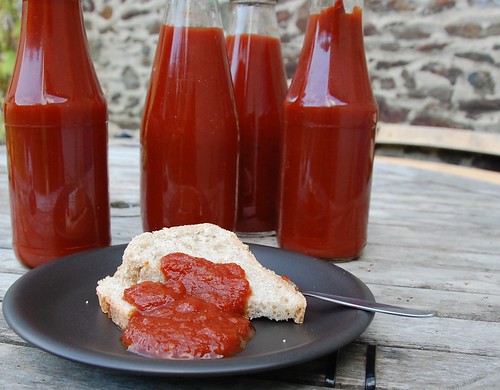
tomato ketchup

This is what I made with the pot of tomatoes I was working on yesterday. Two litres of simple, rich, thick tomato ketchup.

Last year I tried quite a range of different recipes for tomato jams and ketchup and they were good but they weren't quite the same as the thick red gloop of my misspent youth. This is much closer to the mark and has no garlic or onion in it.

You will need 9 litres of fully ripe, washed and roughly chopped (in halves or quarters) red tomatoes and a pot big enough to take them all. I'm not sure what the weight is but I'll be filling the pan again tomorrow and will weigh it then for an update. *** UPDATE *** The weight of tomatoes in my pan full is about 7kg/15lbs.

Without adding any extra water, set the pan of prepared tomatoes over a low heat until the juices start to run, then give it all a good stir and turn the heat up for 20 minutes or so until the whole pan is full of soft, cooked tomato goodness.

Turn off the gas and allow to cool a little. This is for your comfort, so if you can take the heat move straight onto the next stage.

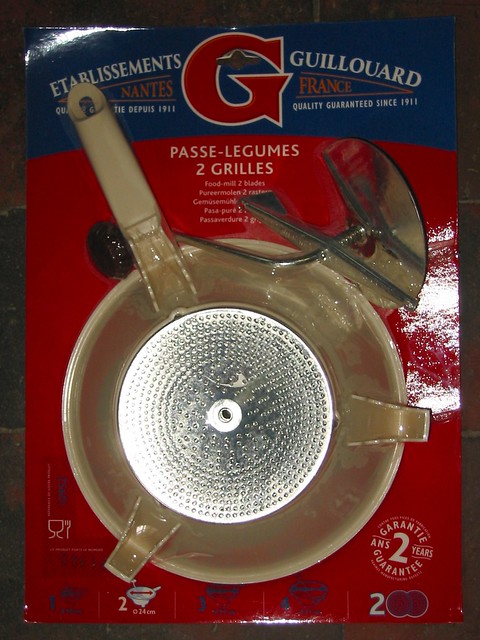
Run the softened tomatoes, skin, seeds and all through a food mill. You'll need something like this, I bought mine four years ago and it's still going fine.

food mill

This will remove the seeds and any lumpy bits but still press most of the skin and flesh through. When it's all done you'll have reduced the volume in the pan to about 6 litres.

Put it back on the heat, bring to a simmer and allow to reduce, stirring frequently to avoid it catching, until it's 3 litres, a half of what you started with. A big preserving pan with graduations on the side is helpful but you could use a ruler. Measure the depth of liquid when you start and stop when you get to half of that. It does take a bit of time so keep yourself busy in the kitchen while it does its stuff.

Add to the pan, 500g white (or any colour you fancy!) sugar and 500ml of 5% (or greater) vinegar - I used a 5% cider one. Season with two teaspoons of paprika, 1 teaspoon of ground allspice, 1 teaspoon of cinnamon and three dried red chillies. The spicing is up to you, this is lightly fragrant. If you use whole spices you'll probably want to strain them out before bottling. Add 25-30g good salt. I used sea salt.

Stir everything in and then reduce the volume again to two litres. You'll need to stir much more frequently now and the sauce will spit so use a long handled spoon, wear an oven glove or wrap your hand in a tea towel to avoid burns.

When the sauce is reduced it should be thick enough but you can reduce it a little more if you like a really rich dollop with your chips.

Pour into warm sterilised bottles or jars and seal the lids. If you want you can heat treat this for longer keeping. Put on the caps but don't tighten and process in a simmering water bath with the water up to the neck of the bottles for 25 minutes, then remove and tighten caps. We'll use it all up before it has a chance to go off so I haven't bothered. Refrigerate after opening.

Thursday, September 09, 2010

Macaroni con funghi

Hello again! The long delay hasn't been because I've died due to mushroom poisoning, rather that the season has progressed from potatoes and courgettes to fungi and tomatoes pretty much seamlessly and it's still stretching my ability to come up with something fresh and interesting.

forest fungi 1

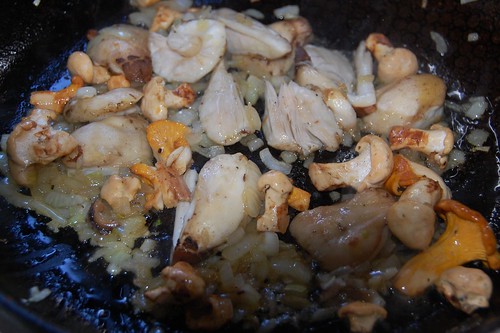
My days are spent rendering tomato products and drying and freezing various fungi for the winter. Today I had a big pot of tomatoes that were becoming passata and some mixed varieties of mushrooms - chanterelle, sheeps' feet and parasols - to preserve.

It seemed hopelessly Italian so for my supper I had to include some pasta. Start the pasta first, if it finishes cooking before the sauce is ready, drain and keep warm but it should all come together about right.

forest fungi 2

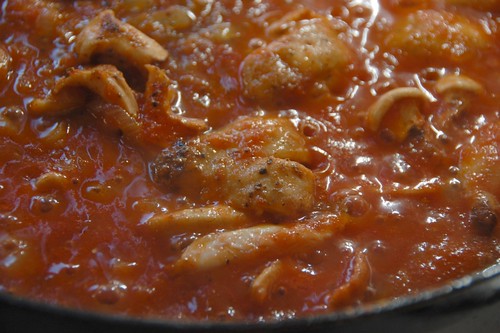
The sauce was made with a clove of garlic and a small onion (or use a shallot) chopped fine and softened in plenty of olive oil. When this starts to smell delicious add your prepared mushrooms and stir them around in the hot pan so that they cook and take on the caramel sugars of the onion. Add a couple of ladles of hot fresh tomato passata, salt and pepper to taste and allow to simmer down for a few minutes.

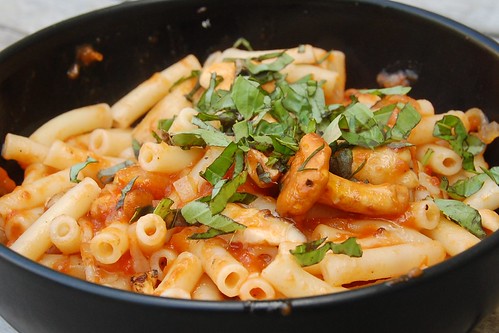
Add the drained pasta to the sauce, toss well, sprinkle with some fresh green basil and serve.

forest fungi 3

Thursday, August 26, 2010

Puff Ball Puff

fungus

I'm sorry it's been so quiet around here. Mostly it's because I'm just eating what's growing and cooking it as simply as possible. There are only so many ways of displaying a plate of potatoes, beans and courgettes before everyone falls asleep from boredom, the eater included.

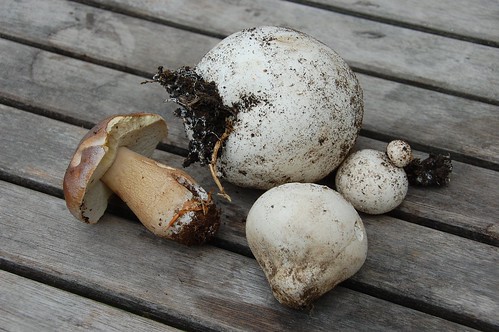
Anyway, after the heat came the rain and that has proved to be ideal conditions for the Giant Puff Ball, currently known as Calvatia gigantea in botanical terms. Before I get too bored with these as well, and regular readers will be aware of my ambivalence to all things mushroomy, I thought I'd show you a typical presentation.

The Giant Puff Ball is a robust creature and can be chopped up and used pretty much as you would use a soft tofu or aubergine in any of your favourite dishes but I particularly enjoy them sliced and coated in a thin batter before pan frying. They also make damn fine tempura if you're in the mood for a Japanese theme.

Here the cooked slices are served with a garden salad of onions, tomatoes, mild chilli pepper, golden purslane and basil leaves. No need for dressing because of the oil already on the puffball puffs and just a bit of salt and lemon juice to bring out the flavours.

If you get the opportunity do try them, they're really quite special.

Tuesday, August 10, 2010

First of a New Season

First of a new season

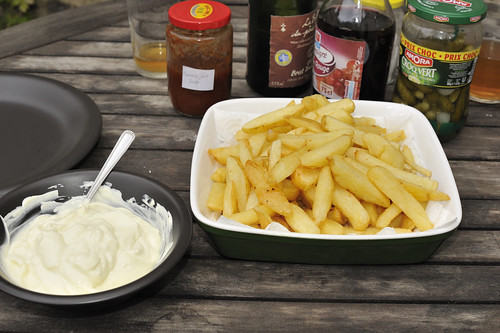
We've been eating new potatoes from the garden for several weeks now but one of the varieties of potato we grow is chosen because we think it makes especially good chips. The variety is British Queen. Potatoes for making chips are usually fully mature and conditioned before use which can mean waiting until September or October before the spuds are fit but we decided to have a go with our just grown and barely legal tubers. It worked surprisingly well.

Frying tonite

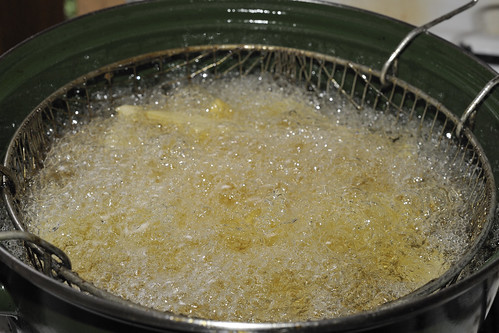
Making delicious full fat chips is pretty simple, prepare potatoes, make nice chunky chips, cook once in hot oil to cook the flesh through, then remove the chips to drain, reheat the oil and pop them back to crisp and brown. See full instructions here.

Mayo

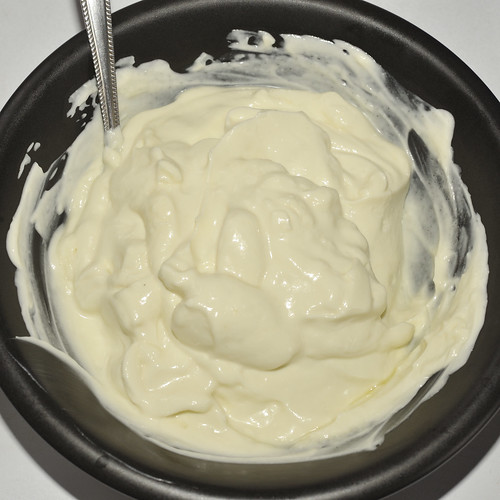
With them, because we are on the continent after all, we had real home made vegan mayonnaise.

We've always bought it before, the Plamil version for preference, one or two other less pleasant ready made alternatives but it actually took a post on David Lebovitz's blog to show me how easy it was to make this for ourselves.

You absolutely must have a good quality blender to make this but if you have that essential it's pretty easy. I've made it a couple of times now, the first time using some cereal milk, the second a small pot of soy yoghurt. Both worked just fine, so the liquid you start with isn't too significant, and you could probably experiment with whatever you have to hand. I have used grape seed oil and a mixture of grape seed and olive oils. I think all olive oil would be too strong a flavour for most purposes although if you were making aioli it might work.


80 - 100g chilled cereal milk, soy milk or soya yoghurt
20 ml lemon juice
1 clove of garlic
pinch of white pepper if liked
150g vegetable oil in a small jug with good pouring lip
Salt
Herbs or seasonings to taste


Put the milk liquid, lemon juice and chopped garlic in the blender and give it a 30 second whizz to combine, then with the motor running add the oil very, very slowly through the lid into the blades. Try to add just a few drops at a time to begin with and then a very thin slow stream so that the whole process will take several minutes to add all the oil. The mixture will begin to thicken and may make gloopy explosions as it does so don't be alarmed. When it's thick, stop the motor, scrape the mayonnaise out into a bowl and add salt to taste (about 1/2 tsp. for this quantity), extra chopped herbs and a touch more lemon juice if you like it.

You could also add hot chilli sauce and more garlic to make a rouille type sauce or chopped capers, gherkins and herbs for a sauce tartare. Just use your imagination.

If the worst happens and the mayonnaise fails to thicken, perhaps because you added the oil too quickly, then pour the curdled mess back into the jug. Put 80g of cold milk or yoghurt in the blender and start again, adding the jug contents very very slowly as if it were just oil. This classic rescue formula works, I've done it!

Monday, August 02, 2010

Intermediate Interval Separating


So I'm really sure the WHOLE WORLD would like to know what it is that I eat on those days when it's not good enough to blog about.

Here we have a prime example - casually entitled Rat Charlotte it is a tempting combination of 3 day old leftover ratatouille and some pain de mie, the French equivalent of Mothers Pride, manipulated in a classic manner.

I don't know why it is that I can't make food in portions for one person, or when I find myself with far too much to eat at any one time I don't just throw the excess away immediately. Something in my frugal guilt laden upbringing just keeps me hanging on, resenting it and yet eating it although driven to the point of anorexia.

You might make this yourself, some evening when you've no money, little other food and in desperate hunger but really, if you were me, now, you'd be better off if you didn't.

It was o.k.